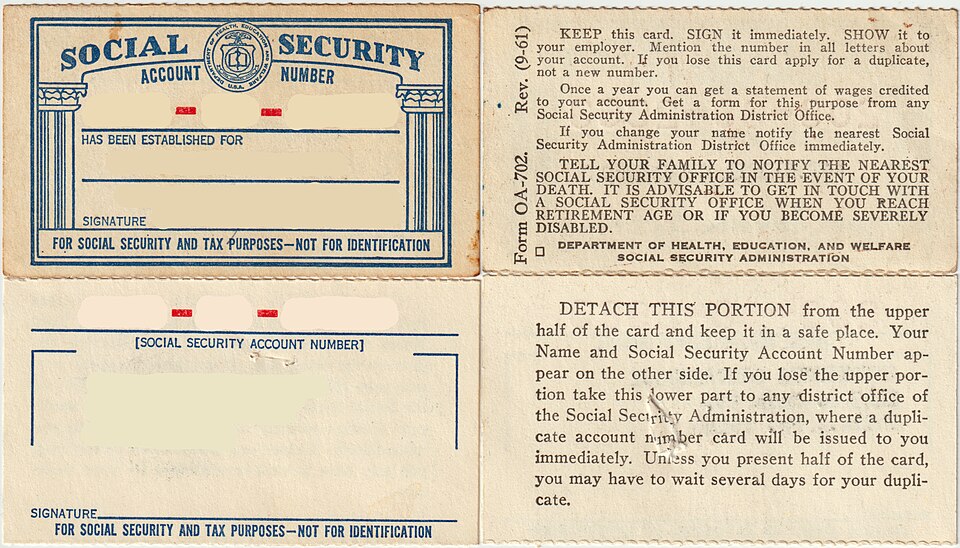

A wallet goes missing, and somewhere in the scramble over bank cards and a driver’s license comes the sinking realization: the Social Security card was in there too. Before you clear a morning for a trip to a field office, or worse, pay some website to “handle it,” it is worth knowing three things. Replacement cards are free. In most states you can request one from your couch. And in a surprising number of situations, you do not need the physical card at all.
Here is how the process actually works in 2026, straight from the Social Security Administration’s own rules.
First question: do you need the card, or just the number?
For most everyday purposes, what matters is knowing your Social Security number, not possessing the paper card. SSA itself makes this point on its replacement card page: if you know your number, you often do not need a physical card. Doctors’ offices, banks, credit applications, and tax forms ask for the number. Employers need the number for wage reporting; many will accept other documentation when verifying your identity for a new job.
The situations where the actual card is most commonly requested include starting certain jobs where the employer asks for it as an I-9 document, and some state ID or benefits processes. If nothing like that is on your calendar, a missing card is mostly an identity-theft concern, not a paperwork emergency. The standing advice from SSA is to keep the card at home in a safe place and never carry it, precisely because a lost card exposes the one identifier you cannot easily change.
The free online replacement
If you do want a new card, the fastest route runs through a personal my Social Security account at ssa.gov/number-card/replace-card. The online option is available to U.S. citizens 18 or older who have a U.S. mailing address, are not requesting any change to the name or other details on the card, and hold a driver’s license or state ID from a participating state, per SSA’s own FAQ. You answer identity questions, the request goes in, and the card arrives by mail. SSA publishes current processing times on its site; the card itself is identical to the one you lost, same name, same number.
If the online route is not available to you, the fallback is Form SS-5, the same application used for original cards, filed by mail or at a field office along with proof of identity, and proof of citizenship or immigration status if SSA does not already have it on record. The documents must be originals or copies certified by the issuing agency. Photocopies and notarized copies do not count.
There is a limit, and here is why it rarely matters
Federal law caps replacement cards at three per year and ten per lifetime, a limit set by the Intelligence Reform and Terrorism Prevention Act of 2004 and spelled out in SSA’s operating rules. Two carve-outs keep the cap from biting ordinary people: cards issued because of a legal name change or a change to a work-authorization notation do not count against the limits, and SSA can grant hardship exceptions when a card is required to keep a benefit or service and the limit would cause significant hardship.
Still, the cap is a good argument for breaking the habit of carrying the card. Ten replacements sounds like plenty until a chaotic decade spends them.
When you must update the card, not just replace it
A replacement card reprints what SSA already has. If your name has changed through marriage, divorce, or a court order, that is a different transaction: a corrected card, which requires documentary proof of the change, such as a marriage certificate or court order, along with identity documents. Corrected cards cannot be requested through the basic online replacement flow, though SSA’s online tools can start the process in many states before you finish by mail or in person. The good news doubles here: corrected cards are also free, and they do not count against the three-per-year limit.
Whatever you do, make sure your employer’s records and SSA’s records match. Wages reported under a name that no longer matches SSA’s file can fail to land in your earnings history, and your future retirement benefit is calculated from that history.
Skip the middlemen and the scam calls
Search results for “replace Social Security card” are crowded with third-party sites that charge $30 or more to fill out the free form for you. Nothing they do speeds up SSA. Every legitimate step happens at ssa.gov, at no cost.
The same skepticism applies to your phone. A caller claiming your Social Security number has been “suspended” because of suspicious activity, and that you must verify the number or move money to fix it, is running one of the most common government imposter scripts in the country. SSA does not suspend numbers, and it does not call to threaten you. Reports of that scam go to the SSA Office of the Inspector General at oig.ssa.gov.
If your card was lost in circumstances that suggest theft rather than misplacement, take the extra hour to protect the number itself: consider a free credit freeze with the three bureaus and review your Social Security earnings record once a year through your my Social Security account. The paper card is replaceable. The number’s reputation is the thing worth guarding.
This article was produced with AI assistance and reviewed by a human editor. Figures are linked to their primary sources; where a claim could not be verified from the public record, we say so.
Leave a Reply