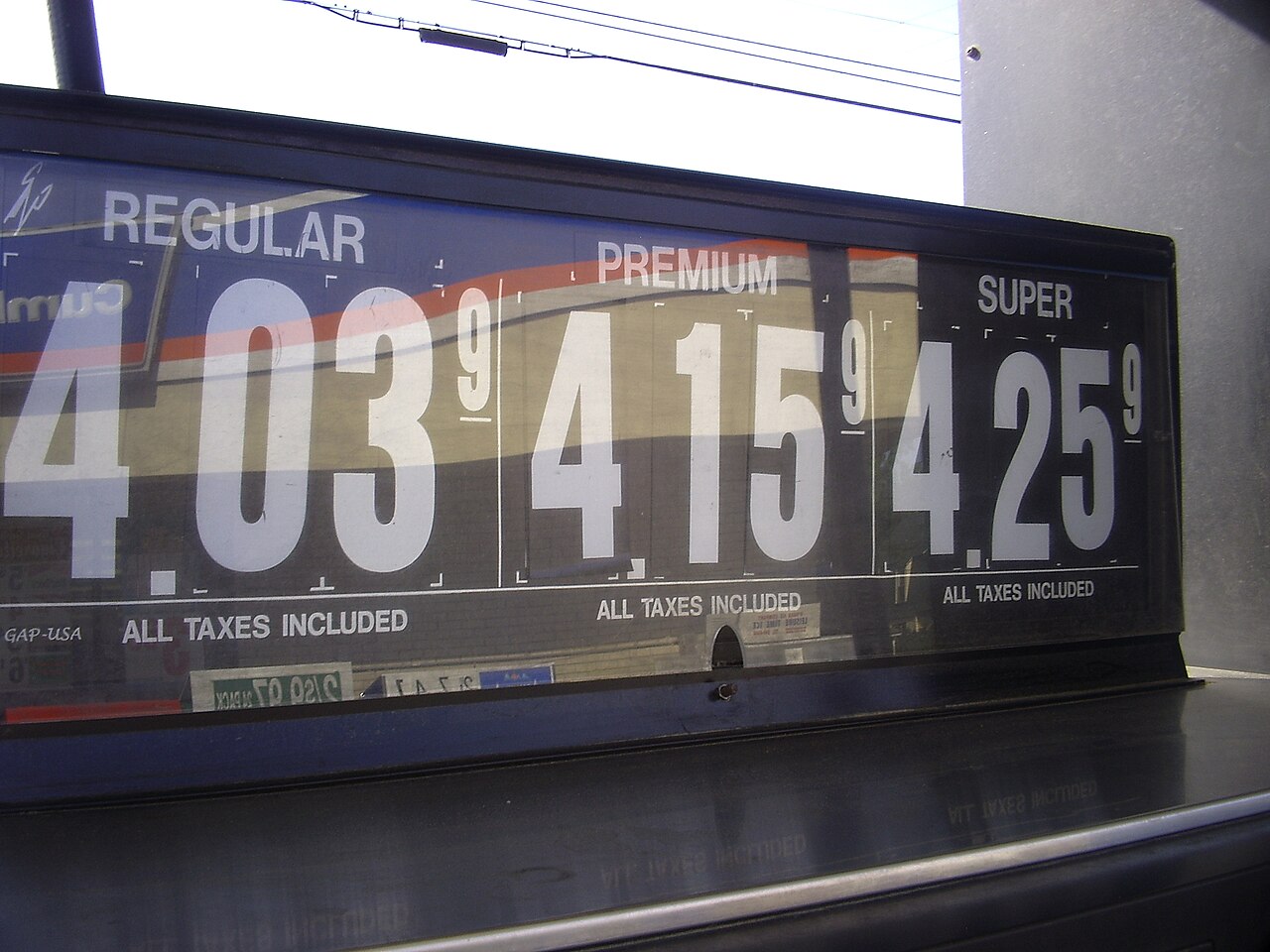

Regular gasoline averaged about $4.49 a gallon nationwide in the week of May 18, according to the Energy Information Administration’s weekly pump price survey. A year ago this same week, the average was about $3.17. In early January it was roughly $2.80. If it feels like the price at the corner station changed character almost overnight this spring, the federal data says your memory is accurate: nearly all of the increase arrived in a rush between early March and early May.
With Memorial Day, the traditional start of the summer driving season, arriving next week, this is a good moment to separate what actually sets the number on the sign from the folklore. The short version: this year’s spike is mostly a crude oil story, the government’s forecasters expect some relief as summer goes on, and the seasonal machinery that always raises summer prices is running on top of it all.
Crude oil is roughly half the pump price
The EIA’s breakdown of what goes into gasoline prices is the right starting point. The cost of crude oil typically makes up around half of what you pay for a gallon of regular. The rest splits among refining costs and profits, distribution and marketing, and federal and state taxes. The federal gasoline tax is 18.4 cents per gallon; state taxes vary widely, which is one big reason a gallon costs so much more in some states than others.
That structure means the pump price mostly follows the world oil market, with a lag of days to weeks. When crude moves $10 a barrel, gasoline eventually moves roughly 24 cents a gallon, because a barrel holds 42 gallons.
What actually happened this spring
This year supplied a textbook demonstration. In its April outlook, the EIA attributed the run-up directly to a supply shock: disruptions to oil flows through the Strait of Hormuz, the channel that carries a large share of the world’s seaborne oil, pushed crude prices sharply higher. The agency’s April Short-Term Energy Outlook, its annual summer fuels assessment, expected Brent crude to peak near $115 a barrel in the second quarter before easing as flows resumed, and forecast retail gasoline peaking at a monthly average close to $4.30 a gallon in April, averaging more than $3.70 for 2026 as a whole.
Prices at the pump ran somewhat hotter than that April projection: the weekly average crossed $4.45 in early May before flattening out just below $4.50 in the past two weeks. The EIA’s May outlook update marked its numbers up accordingly. It now expects regular gasoline to average about $4.31 a gallon over the second quarter and $4.24 over the third quarter, the heart of driving season, with the full-year 2026 average at $3.88, up from $3.10 in 2025. Behind that sits a Brent crude forecast averaging $95 a barrel this year versus $69 last year.
Two things are worth noticing in those numbers. First, the forecasters think the worst is roughly here: the quarterly path drifts down, not up, through the fall, with the fourth quarter projected near $3.81. Second, a forecast built on a geopolitical disruption inherits that disruption’s uncertainty. If Middle East flows normalize faster than assumed, prices could undershoot; a new flare-up, and they won’t.
The summer premium happens every year
Even in calm years, summer gasoline costs more, for two mechanical reasons the EIA documents in its pricing explainer. Refineries must switch to summer-blend gasoline, formulated to evaporate less in hot weather; it is more expensive to make. And demand rises as Americans drive more between Memorial Day and Labor Day, letting stations and refiners earn wider margins. Those seasonal forces alone typically add a noticeable premium to spring and summer prices before an autumn fade, when the cheaper winter blend returns and driving slows.
Summer also brings hurricane season, which matters because so much U.S. refining capacity sits on the Gulf Coast. A major storm that forces refineries offline can spike prices regionally, and sometimes nationally, within days, entirely independent of crude oil.
Why your town’s price is different from the average
The national average is an abstraction; nobody buys gas at it. State taxes range from pennies to well over 60 cents per gallon. California and other West Coast states also require special gasoline formulations and sit far from other regions’ refineries, keeping their prices persistently highest. Stations near refineries and pipelines pay less for supply than stations at the end of long distribution runs. And competition matters block by block: a station across from two rivals prices differently than the only pump for 40 miles.
What a driver can actually do
You cannot vote on the Strait of Hormuz, but the controllable parts add up. Prices vary by 20 to 40 cents a gallon within a typical metro area, so comparison shopping, or simply noting the consistently cheap stations on your regular routes, pays reliably. Most cars are designed for regular; buying premium fuel a manufacturer doesn’t require is a pure giveaway. Steady driving, properly inflated tires, and combining errands stretch each tank further. And if the forecasters are right that late summer and fall should run cheaper than today, drivers with flexibility on big discretionary road trips may find September kinder to the wallet than July.
The sign at the corner station is a news ticker for the world oil market, filtered through refineries, taxes, and your local competitive map. This summer it is telling a story about geopolitics first. The seasonal premium, at least, is the part that always ends.
This article was produced with AI assistance and reviewed by a human editor. Figures are linked to their primary sources; where a claim could not be verified from the public record, we say so.
Leave a Reply