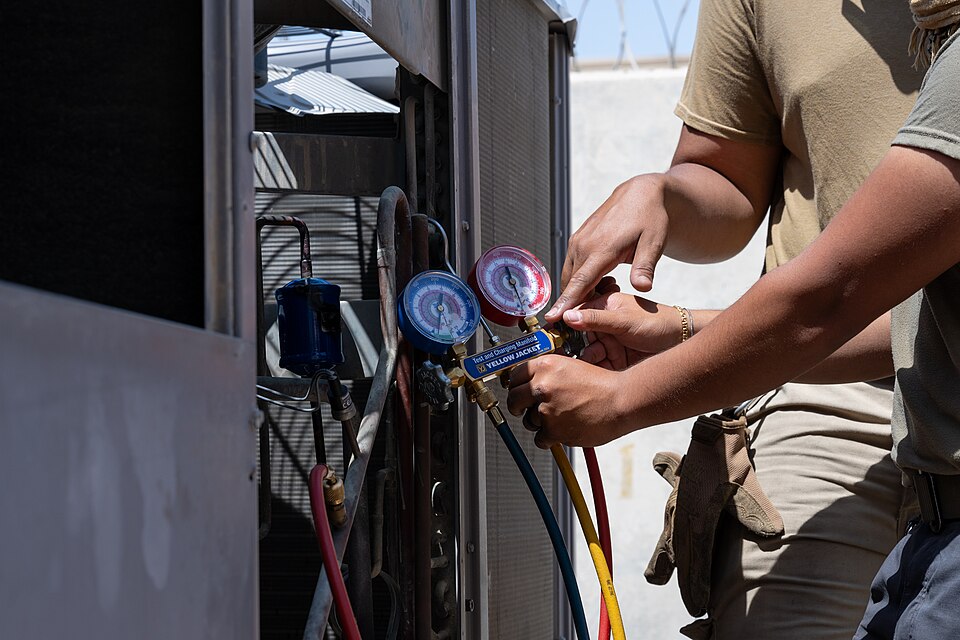

The water heater quits on a Saturday, or the air conditioner gives out in the first week of a heat wave. Every homeowner eventually faces that moment, and the mailers and online ads have an answer ready: buy a home warranty, and the repair is somebody else’s problem. The pitch lands hardest with retirees and anyone living on a fixed income, because a surprise four-figure repair bill really can wreck a monthly budget.
But a home warranty is not the only way to prepare for that bill, and for many households it is not the best one. The honest comparison is between paying a company every year for a promise, and paying yourself every year into an account you control. Here is how the two stack up.
A home warranty is a service contract, not a warranty
Start with what the product actually is. The Federal Trade Commission points out that so-called home warranties are really service contracts: you pay extra, typically year by year, and the company agrees to repair or replace certain covered items, such as appliances or a heating and cooling system. Unlike a manufacturer’s warranty, which is included in the price of a product, a service contract is a separate purchase with its own fine print.
That fine print is where most of the disappointment lives. The FTC’s guidance on extended warranties and service contracts urges buyers to check exactly what is covered, for how long, who performs the work, and what you must do to keep the coverage valid. Home warranty contracts commonly exclude pre-existing problems, cap what they will pay per item or per year, charge a service-call fee every time a technician comes out, and can deny a claim if the company decides the equipment was not properly maintained. You usually do not choose the repair company either; the plan does.
The emergency fund does the same job with no fine print
Now consider the alternative: the same money, parked in a savings account earmarked for repairs. There are no exclusions, no claim forms, no service fees, and no argument about whether the furnace was maintained well enough. If the dishwasher dies, you can repair it, replace it, or decide to live without it, and the money that is left is still yours. If nothing breaks all year, you are ahead, and the balance earns interest instead of expiring.
The catch, of course, is that you have to actually have the fund. The Federal Reserve’s latest Survey of Household Economics and Decisionmaking found that 63 percent of adults in 2024 said they could cover a hypothetical $400 emergency expense entirely with cash or its equivalent. That means roughly one in three could not, and a real repair often costs several times $400. For households in that position, the yearly cost of a warranty can feel easier than building savings, even if it buys less protection than it appears to.
Run the math before you sign
The comparison is simple enough to do on paper. Add up what the warranty costs per year, then add the service-call fee for each visit you would realistically make. Set that against the payout limits in the contract, not against the sticker price of a new appliance, because the contract’s caps, exclusions, and depreciation clauses decide what the company actually pays. Then ask: if I put that same annual amount into savings every year, how quickly would I have enough to handle the likely repairs myself?
For many homeowners with newer systems, the answer is that the warranty money would build a meaningful repair fund within a few years. Keep the fund somewhere safe and boring: a federally insured savings account is protected up to $250,000 per depositor, per bank, per ownership category, as the FDIC explains on its deposit insurance pages.
When a warranty can still earn its keep
None of this means a home warranty is always a bad buy. It can make sense in a few situations. If you just bought an older home with aging systems and your cash went into the down payment, a year or two of coverage can bridge the gap while you rebuild savings, and sellers sometimes pay for the first year as part of the deal. If you physically cannot vet contractors or manage a repair yourself, the plan’s dispatch service has real value. And some people simply sleep better paying a known amount than facing an unknown one; that peace of mind is worth something, as long as you understand its limits.
If you do buy, treat it like any other contract. Read the coverage list and the exclusions before paying, not after the compressor fails. Check the company’s complaint record with your state attorney general and consumer protection office. And know that if a company misleads you or refuses to honor its own contract, you can report it to the FTC at ReportFraud.ftc.gov and to your state regulator.
The bottom line
A home warranty transfers some repair risk to a company, on the company’s terms. An emergency fund keeps the risk but also keeps the money, the flexibility, and the interest. If you can save steadily, the fund usually protects you better over time. If you cannot absorb any repair bill right now, a carefully chosen service contract can be a stopgap, but read every page first, because the coverage is only as good as its exceptions.
This article was produced with AI assistance and reviewed by a human editor. Figures are linked to their primary sources; where a claim could not be verified from the public record, we say so.
Leave a Reply