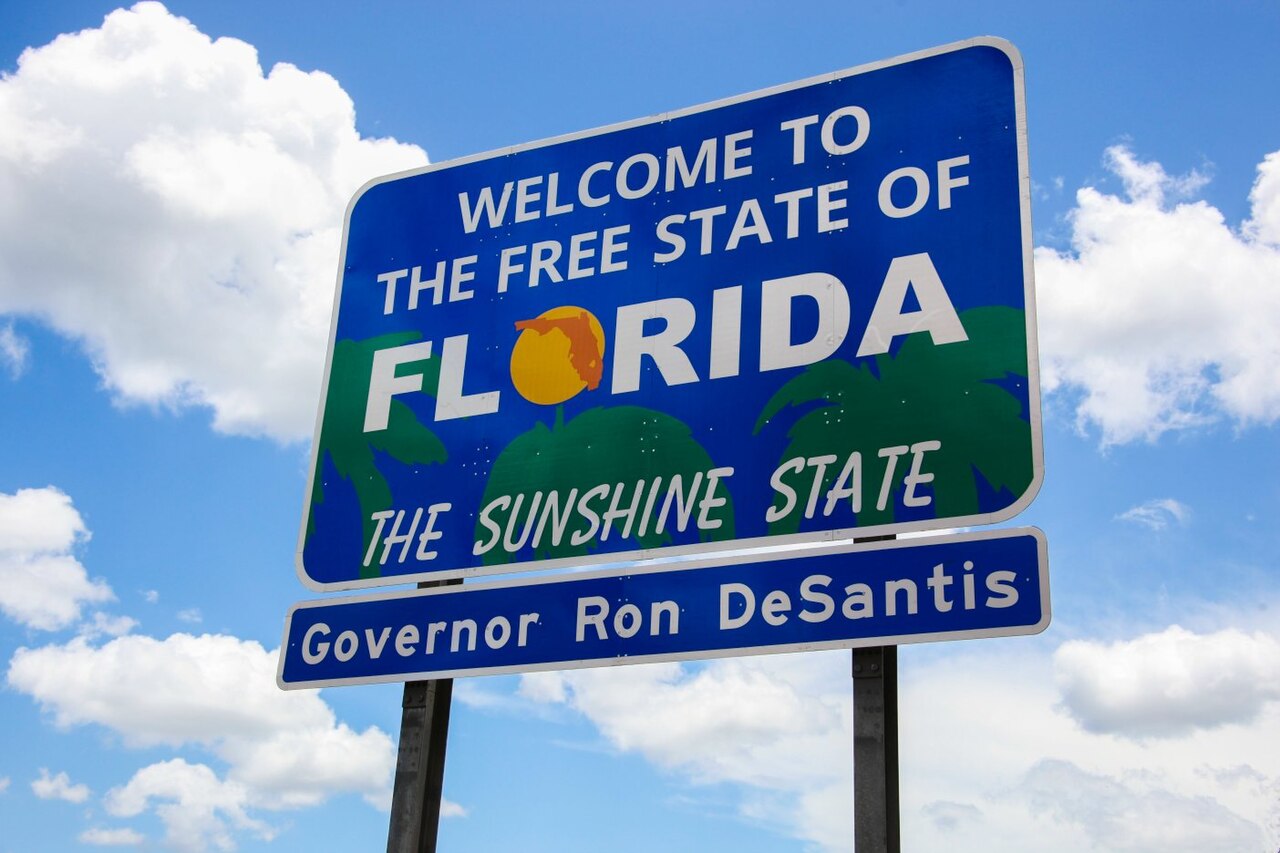

Two retirees with identical incomes can owe very different tax bills, and the difference often comes down to a state line. The federal rules on pensions, IRA withdrawals, and Social Security follow you everywhere. State income tax does not, and in 2026 the map is friendlier to retirees than it has been in decades.
Here is where retirement income goes untaxed at the state level this year, which states just changed their rules, and why the income tax is only one piece of the decision if you are thinking about moving.
Nine states have no income tax at all
Alaska, Florida, Nevada, New Hampshire, South Dakota, Tennessee, Texas, Washington, and Wyoming levy no broad state income tax, so pensions, 401(k) and IRA withdrawals, and Social Security all arrive untouched by the state. Two footnotes worth knowing: New Hampshire’s separate tax on interest and dividends has been fully phased out, and Washington applies a capital gains tax to large gains above a multimillion-dollar threshold, which will not touch ordinary retirement withdrawals but can matter if you sell a business or a concentrated stock position.
No income tax does not mean low tax. These states fund government another way, usually through property or sales taxes, which is why the full picture matters more than the headline.
Four more tax income but skip retirement income
A second group of states has an income tax for workers but exempts most or all retirement income:
- Pennsylvania does not tax retirement benefits, including public pensions and typical employer-plan distributions taken after meeting the plan’s retirement requirements. The state’s municipal retirement system spells it out plainly: benefits are subject to federal tax but not to Pennsylvania state and local income taxes. Early withdrawals before retirement eligibility are the main exception.
- Illinois lets residents subtract federally taxed retirement income, including 401(k) plans, IRAs, and government and private pensions, when they compute state taxable income. The details are in the Illinois Department of Revenue’s Publication 120, Retirement Income.
- Mississippi exempts pensions, annuities, IRA and 401(k) distributions, and Social Security, provided plan retirement requirements are met, per the state Department of Revenue’s individual income tax FAQ.
- Iowa has excluded retirement income such as pension and IRA distributions from state tax for residents 55 and older since 2023.
One wrinkle across this group: the exemptions are aimed at genuine retirement distributions. Wages from a part-time job in retirement, and in some cases early distributions, remain taxable.
Michigan finishes its phase-out this year
Michigan spent four years unwinding its 2012 pension tax under Public Act 4 of 2023, and tax year 2026 is when the phase-in completes. The birth-year tiers that decided who could deduct retirement income are gone, and retirees can generally claim the state’s full retirement and pension deduction regardless of when they were born, subject to annually adjusted dollar caps. The Michigan Office of Retirement Services keeps a running explainer in its Public Act 4 FAQ. Note that this is a capped deduction, not a blanket exemption, so retirees with large distributions may still owe some Michigan tax.
West Virginia stops taxing Social Security entirely
The other change that lands in 2026: West Virginia’s three-year phase-out of its Social Security tax is complete. Under the schedule set in 2024, higher-income beneficiaries could exempt 35% of benefits in tax year 2024 and 65% in 2025; starting with tax year 2026, the exemption reaches 100% for all filers regardless of income. The state Tax Division documents the change on its Social Security modification page.
That leaves only a small handful of states taxing Social Security benefits at all in 2026, and most of those exempt lower and middle incomes through credits or deductions. The large majority of states never touch benefits.
The income tax is not the whole bill
Before anyone loads the moving truck, three cautions.
Property and sales taxes fill the gap. States without income taxes tend to collect more at the register or on the house. A retiree who owns a paid-off home in a high-property-tax county can easily give back the income tax savings. Homestead exemptions, senior freezes, and circuit-breaker credits vary enormously by state and even by county, and they are worth pricing out for your specific situation.
The federal layer follows you. No state move changes how the IRS treats your traditional 401(k) withdrawals or the portion of Social Security that is federally taxable. State savings come on top of, not instead of, federal tax.
Residency is a facts test, not a mailbox. States with income taxes look hard at people who claim to have moved to a no-tax state while keeping a house, doctors, and most of the calendar year in the old one. If you split time between states, keep records; the burden of proving the move is usually on you.
For retirees who already live in Michigan or West Virginia, 2026 mostly means a smaller state bill without lifting a finger, though it may be worth updating state withholding on pension payments so you are not over-withholding all year. For everyone else, the honest framing is that state tax is a real but secondary factor: run the whole-picture math, including housing costs, insurance, and proximity to family, before letting the tax map choose your zip code.
This article was produced with AI assistance and reviewed by a human editor. Figures are linked to their primary sources; where a claim could not be verified from the public record, we say so.
Leave a Reply