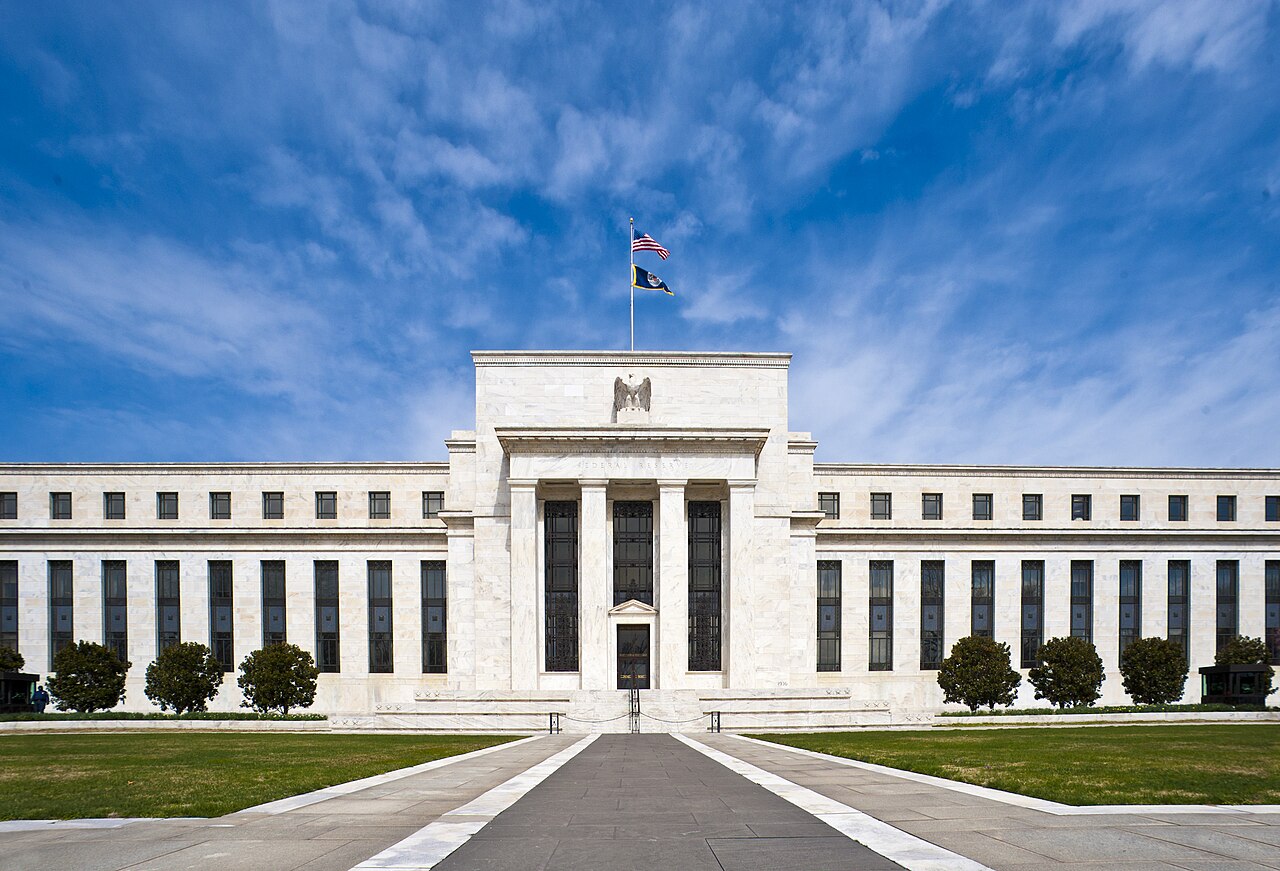

The Federal Reserve did nothing yesterday, and the nothing was the news. At the close of its June 16-17 meeting, the Federal Open Market Committee voted 12 to 0 to hold the federal funds rate at 3-1/2 to 3-3/4 percent, extending a pause that has now run through every meeting this year. It was also the first rate decision under new Fed Chair Kevin Warsh, who took the post-meeting press conference chair for the first time since succeeding Jerome Powell.
For your wallet, a hold means the borrowing and saving rates you saw last week are roughly the rates you will see next month. The forward-looking part of the announcement is where the money is: the committee’s new projections lean toward rates going up, not down, before the year is out. Here is what that combination does to real accounts in the next several weeks.
The statement in plain English
The committee’s language was short and pointed. Economic activity is “expanding at a solid pace” despite uncertainty tied in part to the conflict in the Middle East. Jobs are keeping pace with the workforce. And inflation “remains elevated” relative to the 2 percent goal, partly because of supply shocks that have pushed up prices in sectors including energy. The statement closed with an unusually blunt sentence: “The Committee will deliver price stability.”
The quarterly projections released alongside the decision put numbers on that resolve. The median official now sees the funds rate ending 2026 around 3.8 percent, up from 3.4 percent in the March projections, which arithmetically implies at least one quarter-point increase this year. Officials were nearly split between holding and hiking. The median inflation projection for 2026 rose to 3.6 percent, with unemployment seen at 4.3 percent. Translation: the next move, if there is one, is likelier up than down.
Credit cards and variable debt: no relief, and watch the fall
Credit card APRs float on the prime rate, which moves in lockstep with the Fed’s target within days of any change. A hold means card rates stay near the elevated levels shown in the Fed’s G.19 consumer credit report, and a carried balance keeps costing what it cost in May. The same applies to home equity lines of credit and most variable-rate personal and small-business loans: your July statement should look like your June statement.
The actionable part is the projection. If the committee follows through with an increase later this year, every variable rate resets upward within a billing cycle or two, automatically. Weeks, not months, is the honest window for paying down variable-rate balances at today’s price rather than a possibly higher one. Anyone carrying a large HELOC balance should also check now whether their lender offers a fixed-rate conversion option.
Savers keep their yields, and maybe gain leverage
The flip side of expensive borrowing is that the pause protects savings yields. High-yield savings accounts, money market funds, and short CDs price off the same overnight rate that just stayed put, so the APY on your account should hold steady in the near term; you can compare offers against the averages in the Fed’s H.15 interest rate release and the FDIC’s national deposit rate tables. If markets start pricing in the hike the projections hint at, banks that compete for deposits tend to firm up CD offers first.
The practical read for savers: there is no urgency to lock a long CD out of fear that rates are about to be cut, because the committee just signaled the opposite direction. Laddering, splitting money across staggered maturities, remains the way to stay flexible when the Fed itself is undecided.
Mortgages march to a different drummer
Thirty-year mortgage rates do not follow the federal funds rate directly; they track the 10-year Treasury yield, which moves on inflation expectations and growth prospects. A widely expected hold, by itself, barely registers. What can move mortgage rates over the coming weeks is the projection shift: a committee that sees 3.6 percent inflation and a possible hike is a committee whose outlook can nudge long-term yields, and with them mortgage quotes, in either direction as the data comes in. Buyers mid-transaction should treat rate locks as cheap insurance against exactly this kind of drift. Existing fixed-rate borrowers, as always, feel nothing.
What to actually do before the July meeting
Three moves fit the moment. First, treat variable-rate debt as the priority; it is the only household line item that reprices automatically if the projections become policy. Second, shop savings yields while banks are holding them up; the spread between the best national offers and the average checking account remains enormous. Third, ignore anyone claiming certainty about the next move. The committee published its own disagreement in black and white this week, and the next scheduled meetings come in late July and mid-September, with two more inflation reports in between. The wallet-level summary of June: nothing changed, and the reason to act now is that the committee just told you what might.
This article was produced with AI assistance and reviewed by a human editor. Figures are linked to their primary sources; where a claim could not be verified from the public record, we say so.
Leave a Reply