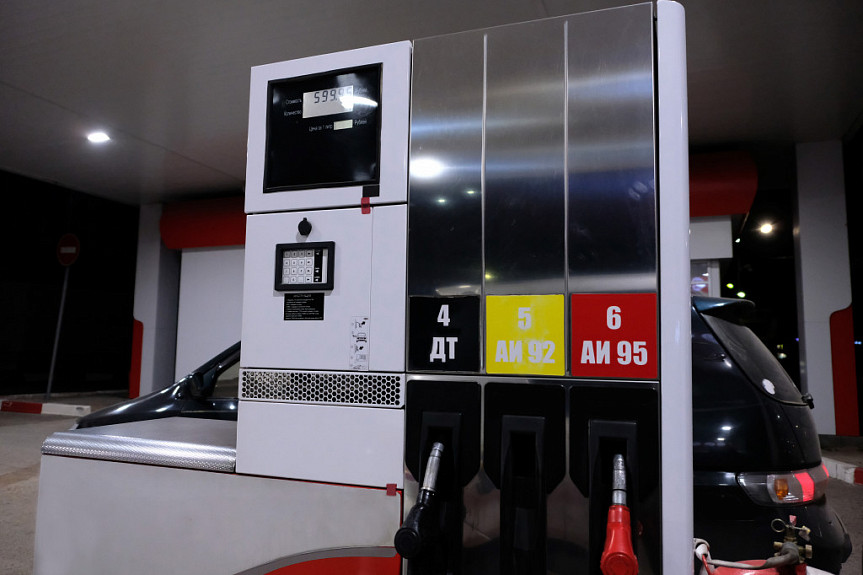

One month at the gas pump just did more damage to household budgets than a full year at the grocery store. That is the strange arithmetic inside the most recent Consumer Price Index: gasoline prices jumped 21.2 percent in March alone, while grocery prices rose just 1.9 percent over the entire past year.
The latest reading we have is the March CPI report, released by the Bureau of Labor Statistics on April 10. It showed overall prices up 0.9 percent in a single month and 3.3 percent over the past 12 months. The April report is due tomorrow morning, so this is a good moment to take stock of what the current numbers actually say about your real costs, and what to watch when the new figures land.
The headline numbers, in plain English
The 0.9 percent monthly increase in March was a genuine jolt. As recently as February, the 12-month inflation rate stood at 2.4 percent. One hot month pushed it to 3.3 percent.
But the report reads very differently depending on which line you look at. Strip out food and energy, and the so-called core index rose a routine 0.2 percent in March, putting core inflation at 2.6 percent for the year. In other words, the underlying trend did not lurch. Energy did.
Gasoline did almost all of the damage
BLS said the energy index rose 10.9 percent in March, the largest monthly increase since September 2005, and that gasoline’s 21.2 percent seasonally adjusted jump was the largest in the history of the series, which goes back to 1967. Before seasonal adjustment, pump prices rose 24.9 percent in the month. Fuel oil climbed 30.7 percent, its biggest monthly move since February 2000. Gasoline alone accounted for nearly three quarters of the entire monthly inflation number.
Over the past 12 months, energy prices are up 12.5 percent, with gasoline up 18.9 percent, electricity up 4.6 percent, and natural gas up 6.4 percent. For a driver whose fill-up tracks the national index, a tank that cost $60 in February cost roughly $73 by the end of March. Nothing else in the report moves a weekly budget that fast.
The quiet good news in the grocery aisle
Food, the other category families feel immediately, told the opposite story. The overall food index was flat in March, and prices for food at home actually fell 0.2 percent. Four of the six major grocery groups got cheaper over the month: meats, poultry, fish, and eggs fell 0.6 percent (eggs alone dropped 3.4 percent), and cereals and bakery products, dairy, and nonalcoholic beverages all declined as well.
Over the full year, grocery prices are up just 1.9 percent, well below overall inflation. Dairy products cost 1.6 percent less than a year ago, and the meats, poultry, fish, and eggs group is down 0.9 percent. Restaurant meals are a different matter: food away from home is up 3.8 percent on the year, so the gap between cooking and dining out keeps widening.
Core prices are the slow current underneath
Away from the pumps, the report looked familiar. Shelter, the biggest single item in most budgets, rose 0.3 percent in March and 3.0 percent over the year. Airline fares jumped 2.7 percent in the month and are up 14.9 percent over 12 months, a number anyone booking summer travel has already felt. Medical care is up 3.1 percent on the year, and used vehicles are one of the few big-ticket items getting cheaper, down 3.2 percent.
That mix matters for interpreting the scary headline. A 3.3 percent annual rate driven by a one-month energy spike behaves differently than 3.3 percent spread across rent, food, and services. Energy can give back its gains as fast as it took them; rent almost never does.
What it means for your real spending power
The companion BLS real earnings report for March translated the price data into paychecks: real average hourly earnings fell 0.6 percent in March alone, and over the past year the average worker’s buying power grew just 0.3 percent. A typical raise, in other words, was almost entirely consumed by prices, mostly in a single month.
The practical takeaway is to be precise about which inflation is hitting you. If you drive a long commute, your personal inflation rate right now is likely well above 3.3 percent. If you drive little and rent hasn’t reset, you may be closer to the 2.6 percent core rate. The BLS inflation calculator can convert any dollar figure between months if you want to check a specific expense against the official record.
The April report lands tomorrow morning
BLS releases the April CPI on Tuesday, May 12, at 8:30 a.m. Eastern, per the bureau’s release schedule. The central question is whether March’s energy spike was a one-time event or the start of a run. Watch three things: the monthly gasoline number, whether grocery prices stayed soft after an unusually good March, and shelter, which decides where inflation settles once the energy noise fades.
Either way, the smart posture is the same. Budget decisions built on one month of pump prices tend to age badly, in both directions. The numbers that deserve a response are the slow ones, and tomorrow we will know whether the slow ones moved.
This article was produced with AI assistance and reviewed by a human editor. Figures are linked to their primary sources; where a claim could not be verified from the public record, we say so.
Leave a Reply